Showing posts with label History. Show all posts

Sunday, February 05, 2023

The College Board is a conservative organization

I'm bemused by the brouhaha over the College Board dropping "controversial" and important subject matter in the AP African America History after Florida Governor DeSantis and other conservatives objected. 

What did we expect? The College Board is a fundamentally conservative organization that preserves the status quo. They long offered subject matter tests for Greek and Latin, which is taught at elite private schools, while they did not offer any tests for Asian languages until the addition of Japanese in 1993. They didn't even offer Mandarin until 1994

What's inexcusable is the deference that we gave to the defenders of the unequal status quo. 

When I applied to the University of California, we had to have studied 3 years of a foreign language tested by the College Board. CB did not test for any Asian languages in the 1980s. Thus, I studied German in high school, sitting in the same classroom as Peter Thiel, a native German speaker who immigrated from Germany. 

I would have loved to have studied Mandarin instead, but my high school only offered languages accepted by the University of California, while only accepted languages tested by a testing service organized to sort students from elite high schools in the Northeast for elite colleges of the Northeast. 

This kind of circularity was mind boggling to observe but I sucked it up and studied German and Latin in HS. It was so unfair that all the Asian American students, many of whom spoke an Asian language at home, could not enjoy the same privilege as white students who got to learn a language at public school that they can use to speak with their parents and grandparents at home. 

Because of US immigration law that severely restricted immigration from Asian countries before 1966, most of the Asian American kids in my HS were immigrants who spoke an Asian language at home. 

We had to learn a THIRD language just to get into California's public universities. 

Our test scores for European languages were evaluated against kids learning only a second language. Even worse, we got no credit for knowing Asian languages. 

The College Board has power in part because we give them power. We can cut them out. 

What if, we didn't give value to AP test scores and the curriculum they represent? What if we taught a more in-depth curriculum, tailored to the needs and interests of the students? We'd lose some uniformity, but be more relevant to each student. We might even foster more love of learning for its own sake. 

Colleges and universities can just request a list of the books and readings used in history classes rather than rely on the AP test to create a de facto curriculum. Have kids supply a writing sample from their history or literature classes. 

Aside: 


Friday, November 01, 2019

Sea People

Bad Dad leads the {pages} non-fiction book club at {pages} a bookstore and we read Sea People by Christina Thompson two months ago.


Sea People is an absolute delight and you can read my review on Goodreads.
This book was written specifically for me.*

It tells the story of how the Lapita people, originally from the island of Taiwan (my two grandmothers,) sailed the vast Pacific ocean and settled an area that covers 25% of the earth's surface.

Even if you don't have Lapita grandmothers, read it for the detective story, natural science, history and anthropology. There is something for everyone.

It's written in an accessible and sympathetic style, with a well-annotated notes/bibliography section in the end for those who want to read deeper.

* IRL, I have a high affinity for nonlinear dynamics, climatology, winds and currents. A book that includes not just my grandmothers' history, but 'insertion points' into the Pacific, El Nino/Southern Oscillation (ENSO) and paleoclimate could not be better designed for my interests.
Thompson writes with empathy and good humor, but you have to laugh at some of the whacky ideas white people have about people who aren't white.  Speaking of which, I ran across a couple of science stories about the people of Easter Island, which completely skewer Jared Diamond's Guns, Germs and Steel.

DiNapoli et al showed that the moai monuments on Easter Island are mostly markers for freshwater seeps.  The larger and more reliable the freshwater source, the larger the monument.
Moia picture from Smithsonian article credited to Adwo/Fotolia
That explains most of the moai.  Some of the inland ones were discovered to be very large time-release fertilizer stakes. Quarrying stone for Easter Island statues made soil more fertile for farming.

Researchers traditionally have assumed that builders of the island’s partially buried quarry statues had either planned to move them elsewhere on the island or abandoned them. Designs on the roughly 6.6-meter-tall quarry statues display similarities to those on the only other Rapa Nui statue displaying numerous carved images. That carved figure was previously found at a ceremonial site nearly 20 kilometers west of the quarry.

Although the quarry measures only about 800 to 1,000 meters across, the new soil data show that it was a “little productive gold mine” for farming, says archaeologist Christopher Stevenson of Virginia Commonwealth University in Richmond, who did not participate in the study. Reeds growing in a lake at the base of the quarry would have provided additional phosphorus to the soil, he says.

“The area immediately to the east of the quarry was and is one of the most intensively settled parts of the island, and now that makes much more sense,” Stevenson says.

Tuesday, January 29, 2019

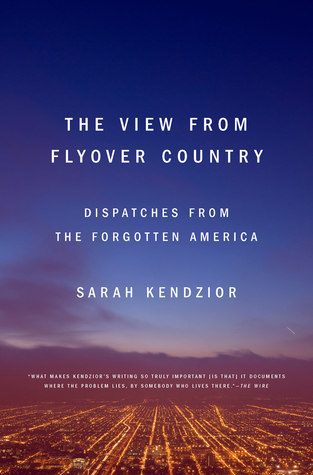
The View from Flyover Country

This is a review that I posted to Goodreads* in 2018.

I've been telling so many people to read this book, follow Sarah Kendzior on Twitter @sarahkendzior and to listen to her podcast (with Andrea Chalupa,) Gaslit Nation.

This is a compilation of her essays, originally published in newspapers between 2012-2014, organized roughly by theme. This can appear repetitive on the surface, but pay close attention to the dates and the world events she cites.

You can pick up and start reading anywhere.

I highly recommend "The Political Consequences of Academic Paywalls" on pages 136-141. Dr Kendzior received her PhD studying authoritarian regimes in Central Asia. The for-profit journal business model is an inconvenience for physical scientists like myself. But having access to her published research, "Inventing Akromiya: The Role of Uzbek Propagandists in the Andijon Massacre," meant life and death for Uzbeks applying for political asylum.

Russian-backed propagandists honed their skills in Uzbekistan, and then trained their sights on the US. A decade after inventing Akromiya, they invented Antifa.

She is a uniquely qualified voice to explain the larger pattern that we see in current US politics.

Never stop looking critically.

Never stop complaining.

It matters.
* I joined the readers' community before Amazon bought Goodreads and log all my reading and thoughts about the books there. You can see the books I am currently reading on the right and click to see what I'm reading, what I've read, or what I'd like to read. Like fabric, I'm adding more books I want to read than I can read them. ;-)

This book reminds me of the Flyover Country app. Set your route and download geophysical data along your route before you leave the house. If you are sitting in a window seat, the GPS reception on your phone (set in airplane mode) will be able to give you real-time information about features below.  It also works on road trips and when hiking.  It even works in remote areas without cell phone access.


This app has a great backstory. Some geologists at the University of Minnesota came up with the idea and decided to apply for a small grant from a National Science Foundation program. They got approval in 15 minutes instead of the more normal 15 months.
Flyover Country® is a National Science Foundation funded offline mobile app for geoscience outreach and data discovery. Learn about the world along the path of your flight, hike, or road trip with inflight maps and GPS tracking. Offline maps with interactive points of interest and geologic data reveal the locations of landscape features, fossils digs, cities, and more that are visible from your airplane window seat, vehicle, or hiking trail vista.

Monday, November 19, 2018

Now that the election is over, let's get to work

Bad Dad sent along this wapost link.  We are both big admirers of Stacy Abrams.  She's right.  Our work has just begun.
The law, as it stands, says that [Kemp] received an adequate number of votes to become the governor of Georgia. And I acknowledge the law as it stands. I am a lawyer by training. And I am someone who’s taken a constitutional oath to uphold the law. But we know, sometimes, the law does not do what it should and that something being legal does not make it right. This is someone who has compromised our systems. He’s compromised our democratic systems. And that is not appropriate.

...because the words I use are very specific.

We have had systematic disenfranchisement of voters. We have seen gross mismanagement of our elections. And we have seen an erosion of faith in our democracy in our state. Those are all true facts.

But these are all solvable problems. And that’s why I’m proud to be an American. That’s why I’m proud to be a Georgian. And it’s why I’m taking up Fair Fight Georgia, because faith is not enough. We have to have action married to that faith.

And I don’t believe that you are trying to cast aspersions or cause me to say anything, but what I am being clear about is that I’m choosing my words very carefully because words have meaning. . . .
I'm currently reading Carol Anderson's One Person, No Vote and it is so upsetting, I have to take time off to read fluff to calm down. None of this is new. Disenfranchisement is a long game, starting with the senate composition enshrined in the US constitution.

Why do Wyoming and Vermont get 2 senators a piece when the District of Columbia has roughly the same number of residents and no senate votes. (A shadow senator without a vote doesn't count, literally.)

Why does Wyoming, Vermont, North Dakota, South Dakota, and Alaska get two senators each (10 total!) while Puerto Rico gets none? PR has slightly more people (3.37 M) than those 5 states combined and gets no representation. The senate, through it's control of the judiciary and other high level posts, wields an inordinate amount of power.

Remember, slaves counted as 3/5 in the census for the apportionment of House of Representatives seats, but got no votes. This was designed to give slave owners more votes in setting policy for the entire country, not just the slave states.

Then there is gerrymandering, voter intimidation, logistical barriers to voting...

I grew up in California and thought that the laws I grew up with apply throughout the country.  For instance, we get 2 paid hours off to vote.  Did you know that, in many states, you can be docked pay or fired for taking time off to vote?  That's why early voting on weekends and voting by mail are so important.

Last year, I read professor Anderson's well-researched and logically explained White Rage. I highly recommend it. I'm heartened to see that she wrote a version for young adults, We Are Not Yet Equal.


Enough for now.  I'm fired up, but I must remain hopeful enough to be productive.  I finally seamed up a sweater and it's beautiful.  Pictures to follow.

Monday, July 23, 2018

Thank-you Jonathan Gold and Linda Burum

I was saddened to read of Jonathan Gold's death over the weekend. Others wrote about his importance quite eloquently. Gustavo Arellano (Ask a Mexican) explained, "His strength lay in the fact that he wrote as someone thankful that the Los Angeles of today was not the Los Angeles of his youth."

Ruth Reichl, his friend and former editor wrote:
But Jonathan didn’t want us to go out to Monterey Park simply to eat Sichuan pickles. He didn’t lure us out to El Monte or the world’s best birria burritos for their mere deliciousness. He wrote enticing prose designed to take us out of our safe little territories to mingle with other people because he knew that restaurants aren’t really about food. They’re about people.

He gave us the keys to a hidden city, introduced us to folks we’d never have known. And the city changed. It is nothing like the city I found when I first came here in 1984.
If you want to understand LA, I highly recommend picking up a copy of Gold's classic, Counter Intelligence: Where to eat in the real Los Angeles.


Gold wrote a column for the Counter Intelligence column for the LA Weekly starting in the mid-1980s.  A collection of the columns was published as this book in 2000.

When we first moved to Los Angeles in the 1990s, A Guide to Ethnic Food in Los Angeles by Linda Burum (1992) was our LA food atlas.

We used to read the chapters (organized by ethnic food type) while looking at the AAA map of Metro Los Angeles (for the big picture) and the Thomas Guide for details. We planned outings to different areas of LA around food and walking around.

Until I moved to LA, I didn't understand it. It's still so vast and hard to describe. But food sociology is certainly a great way to start. Go out and explore. Eat. Look around. Listen. Talk to people.


I sat next to a food critic on a flight who knew Linda Burum. I asked why she didn't update her guide. He said that she moved to NY and was doing other stuff now. In the obituaries and tributes to the important work that Jonathan Gold and Anthony Bourdain have done in popularizing food sociology/anthropology, I see little mention of women.

I want to remind people not to overlook the women who were already there, doing the work in plain sight.  So many women have done the patient work of spending time in kitchens and explaining culture through food.   Culture has room for many heroes.

Monday, July 02, 2018

Sew Inspirational

Sew Becky Jo asked me to write up a post about five sewists that inspire me for the Sewcialists blog and I am happy to oblige.

I had to step back to think a little bit about what that means, or how I want to interpret this assignment. I'm exhausted from all the bad news lately, and have been reflecting deeply about how I can respond--push to make the world more in keeping with my values, while protecting my emotional core. Depending on how you see it, I am either a procrastinator or a researcher.

Several of the books I read in the last year dealt with how social media and technology is harnessed by authoritarians and liars for their own ends. Thus, I decided to focus on five sewists that are less active and "hot" (in the sense of popularity), but resonate with me. I'll also explain why.

Have you ever heard about the Weak Ties Theory? Changing Minds has a good synopsis. In short, social ties are either strong (between tight clusters of members connected mainly with others in the same group) or weak (bridges between strong networks.) 
The more weak ties we have, the more connected to the world we are and are more likely to receive important information about ideas, threats and opportunities in time to respond to them.
Strong ties are the echo/bubble chambers in which misinformation can ricochet without challenge.

Weak ties are the ways in which we expand our understanding about how others experience the world.

(If this interests you, read an academic paper by Mark Granovetter,  who first explained and gave a name to this effect.)

Sewing is a great way to add weak ties to your social media. We are all makers who encounter and solve similar problems. We can learn about sewing *and* about the greater world by following people who experience much different lived experiences than our own. In doing so, we can learn to empathize with people who don't look like us.


Blogger 1.

If I want to direct attention to less-known sewing bloggers, why am I starting my list with super-popular Carolyn of Diary of a Sewing Fanatic?  She's a super-star among bloggers for good reason.  She's been putting out quality content about her sewing journey since 2006, when the sewing blogger world was much smaller.  She's so generous with her time--showing what worked, what didn't, and analyzing why.

I've learned so much non-sewing information from her, too.

Through Carolyn, I've learned how challenging it is for plus-sized women to find professional and on-trend clothing, how much it means for African Americans that one of them was our president, and how personal BLM is when a mother has to send her son or grandson out in the world when so many see them only as a threat.

I read Carolyn to be a better sewist and a better person.

IG: @diaryofasewingfanatic


I'm intrigued by what sewists call Pattern Puzzles, novel ways to cut and shape garments.  Issey Miyake designs often fall in this category. So do the garments in the Pattern Magic series of books by Tomoko Nakamichi.

I follow many sewists that sew Pattern Puzzles and document their experiences to help others.  Some are less active on social media than they were in the past, but quality content is evergreen.


Blogger 2.

I first learned about Pattern Puzzles from Kathleen Fasanella of Fashion Incubator. She's blogged about Pattern Puzzles no fewer than 251 times!

Kathleen is less active in her open access blog than in the past. She runs a (paid) member forum for clothing manufacturers working in the US. I am not a member of that forum, but I hear it is a friendly and nurturing site full of people helping each other.

I have her book and it is an encyclopedia in one volume. Sometimes, I have to read it over several times because she can pack so much information in one paragraph and a few illustrations. Browse through her tutorials and use them. Your sewing will be so much better.

In 2015, she bought a factory--or rather, she built one in Albuquerque, New Mexico. You can follow her and her partners on IG @abqfi.

Another reason to follow Kathleen is to learn more about neurodiversity. She writes very movingly about how many of her life experiences made sense once she learned she is on the autism spectrum. The apparel manufacturing industry has traditionally been home to immigrants and people who think differently. This is it's strength.

 Like many people who are on the spectrum, Kathleen is a slayer of bullshit.

She compiled all her wisdom about The Myth of Vanity Sizing in one place. FYI, I went into this thinking vanity sizing is a thing. She completely convinced me I was wrong. Now I am smug because I know the right answer and there is no one more evangelical than the converted. ;-)

IG: @kathleenfasanella @abqfi

Blogger 3.

Lauriana of Petit Main Sauvage has sewn many pattern puzzles, though her recent makes lean more towards activewear. She works in a wedding dress salon and is generous with her knowledge.

I also enjoy her slice of life writing and photos of rock climbing, bicycle commuting and life in general in the Netherlands.  Plus, her organized, utilitarian and beautiful apartment (in the background of many of her photos) is a life goal.

If you like pattern pieces shaped like this, then this is a blog to read.  Start at the beginning and slowly work your way forwards in time.  I don't know if she is in IG.
Is this a bat or a sleeve?  Read and learn.

Blogger 3.5

Di of Clementine's Shoes took down all of her blog posts, so you can't see any of her Pattern Magic sewing experiments.  Some of the experiments worked.  Some failed.  They were real experiments.  It was inspirational just to watch someone who was up to try anything.

 I'm quite sad that she didn't leave her old posts up when she quit blogging.

Recently, she started posting on IG as @clementinesews. She also posts her work as an architect @dijonesarch. I hope she re-posts her old blog content, because it was really, really good. Oh, she knits and makes shoes, too.


The last two deal with disability or caring for the disabled along with sewing.

Blogger 4.

Many sewing bloggers order interfacing and other notions from Pam Erny of Fashion Sewing Supply. She is now my sole supplier of interfacing. No more bubbling from shrunken fusible interfacing!

Did you know that she also posts many helpful tutorials on her Off The Cuff Shirtmaking blog?

She doesn't write much about her personal life, but she's inspirational in that she is another math/physics person who created a second career for herself and her husband.

Don't you want to learn how to sew a placket like this?

Blogger 5.

Ms. Little Hunting Creek and I were frequent commenters on each others' blogs when we were both much more active bloggers.  We bonded over the fact that we both had the same Home Ec lesson in the 1970s in California.  We both earned BAs from UC Berkeley (Cal)--she in Classics, me in Mathematics.  We also both earned our livings in software despite not formally studying computer science in school.  Hey, if you can learn ancient Latin and Greek grammar, modern software languages are a piece of cake.

Berkeley's breadth with depth requirements for BAs meant that she had to take quite a few science classes (enough to earn a minor in Biology) and I had to take quite a few history classes.  This is probably the reason why Cal grads did not go on to found and run the tech companies that took down democracy around the world.

I suggest you read Sewing as Political Protest.

Her blogging slowed down due to health challenges that you can go over there to read about.  I find it inspirational that she could continue to work (but from home) and carve some time out to make stuff and blog about it.  Oh, she also wrote essays for the Toast.

From Wearing the Pants: A Brief Western History of Pants
According to Herodotus, when Greek soldiers met the Scythians in battle, they were amazed to see Scythian women on horseback fighting alongside the men, all wearing pants and decorated armor. When they went back to Greece they immortalized those Scythian women for posterity as the legendary Amazons in their poetry and art. Painting them looking both chic and fierce, their pictures of the Amazons are some of the earliest Western artworks showing women in pants. But even though pants came to the West from the Scythians and others (along with riding horses), in the West, wearing pants was associated with warfare and restricted to men only. Perhaps, remembering those Amazons, men feared what might happen to them if women were able to wear pants and get their hands on some weapons.
This is why I overcame my initial resistance to arming school teachers. If we armed the (mostly female) school teachers, perhaps they will enjoy the same high pay and cushy pensions as policemen. Amirite?


Each of these five bloggers have taught me things and even changed my mind by giving me new information or reframing it.  Let's keep on learning and making together.


Wednesday, August 16, 2017

I don't know what to call this

I am so effing tired that we have to even fight the dark forces that are threatening our country right now.  If you haven't already done so, I urge you to read Twitter and Teargas: The Power and Fragility of Networked Protest. Zeynep Tufekci has been studying the intersection of authoritarianism, technology and protest for decades and you really, really want to learn from her.

[Addendum: ZT has posted a free pdf version of Twitter and Teargas but I hope you support her and buy a copy.]

Meanwhile, I have an example of how adept the spinmeisters of satan are at manipulating technology and algorithms, I give you my search results yesterday for the "Southern Poverty Law Center Hate Map":

An ad or two appears before the search results, as is typical for Google searches. But look carefully. Notice that the top ad is for a website that exists solely to discredit the splc.org with completely fabricated lies? Who paid for that ad?  How do they act so fast?  There are literally armies of people working on spreading disinformation so that people give up and say that the fault lies with 'many sides.'  Don't be that dumbf*ck.

If you follow me on Twitter, you might have seen me tweet the screen capture to Google. Enough people must have done it because searches for the same phrase and SPLC in general are devoid of ads and go to the organization's site and map. BTW, this is the SPLC Hate Map tonight.

Less well-known, but deserves to be better known, is the Map of White Supremacy mob violence.


Don't miss @JuliusGoat's thread, 'Imagine if these people ever faced actual oppression.'

The white militia is here to demand your obedience with their guns.

AP photo via Mother Jones
Call me a feminazi, but I've never had to resort to carrying a gun to make you agree with me.


Wednesday, February 22, 2017

Colorado Fabrics trip report

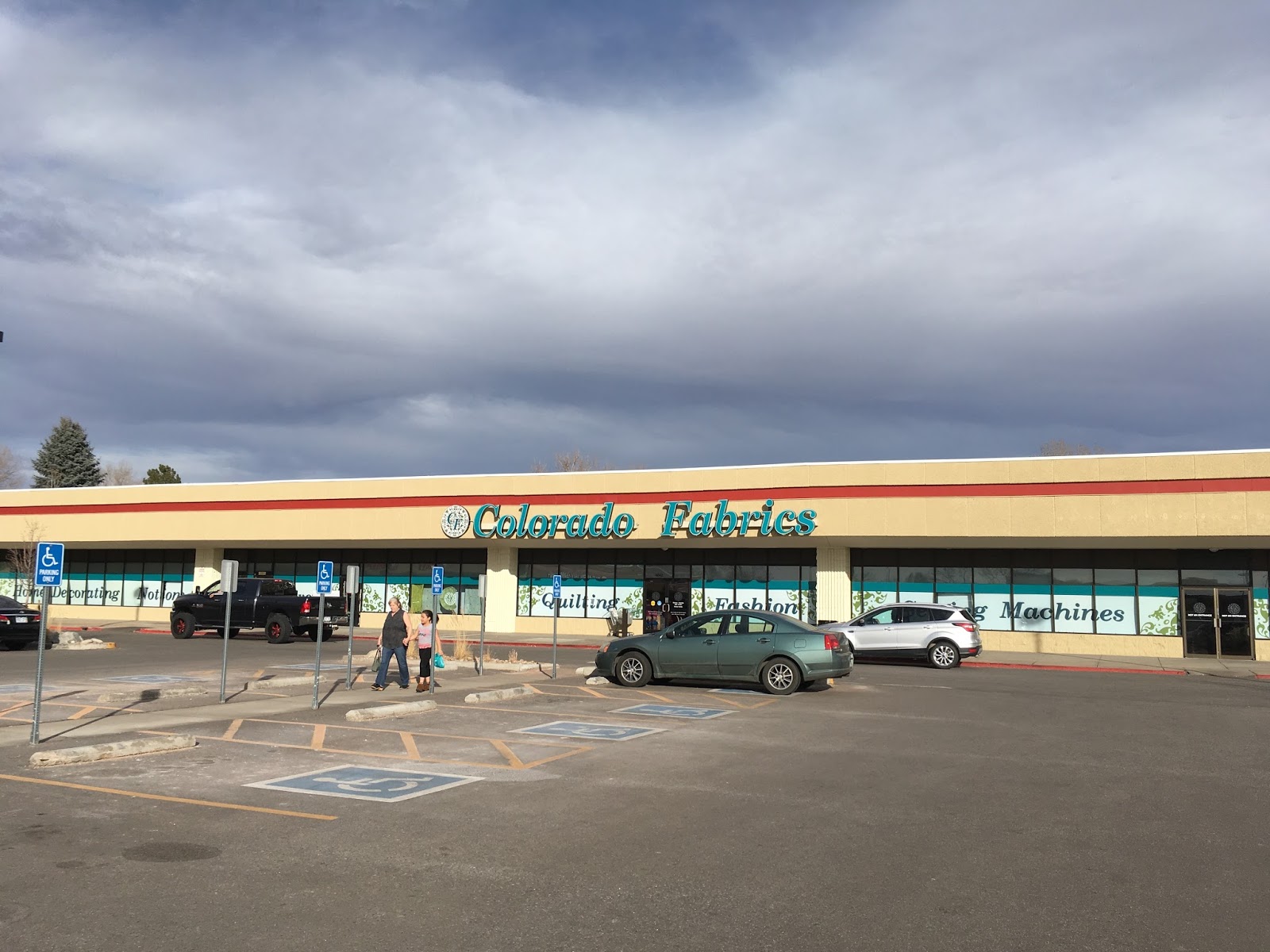
I've posted some of these pictures on IG, but wanted to put down my impressions about the rebirth of Colorado Fabrics in their new home at 4042 S Parker Rd, Aurora, CO 80014.  I have no affiliation with them, but a great deal of loyalty as I've shopped with them for 29 of their 30 years in business.

Even before I moved from Berkeley to Boulder, I had heard about both Tattered Cover Book Store and Denver Fabrics.  They were the premier stores in the time zone and among the best in the nation.  Legendary would not be an understatement.

Did you know that National Jewish Hospital in Denver began as the National Jewish Hospital for Consumptives?  Jewish girls and women who worked in the garment industry in NYC were especially susceptible to consumption both due to crowding and inhaled fibers, which weakened their lungs.  National Jewish treated the sick, without regard for ability to pay.  Jewish organizations raised money to send the sick out to Denver and to pay for their medical care.

The women and girls who recovered founded the garment manufacturing industry in Denver.

All this is a digression to say that there were a lot of garmentos in Denver with links to the NYC and LA garment trade; one family founded Denver Fabrics.  The array of top quality old stock designer stuff sold on rolls at DF was amazing.  As .the. fabric store for the outdoor-obsessed Rocky Mountain region, they also stocked a room full of outdoor recreation fabric.  Add their bridal and home dec departments and you had one stop shopping.

Oh, if you joined their DF Club (mailing list) for $15/year, they gave you 30% discounts on all patterns and books and loaned sewing VHS tapes for free.

Denver Fabrics moved from Denver to bigger quarters in Littleton, but then had to downsize a few years later (but in the same location.)

Times changed.  Amazon arrived.  Joann's perpetually marked patterns down by 40%.  Manufacturing moved overseas and designer dead stock was harder to source.  People quit sewing garments and moved to quilting.  Times were so lean, the former owners sold the name, Denver Fabrics, to Fashion Fabrics Club in STL.

Some long-time employees of DF bought the store from the founding family and are trying to reinvent the sewing store.  It's a totally different time and I have to be careful to not lament what I miss.

The biggest change is that they moved from Littleton to south Aurora and doubled the floorspace to 40,000 square feet.  It's cavernous.
Plenty of parking and you'll need it to get to suburbia.

Panorama from the front entrance.

New NY Designer stuff on near right racks.  Older stuff on shelves to left and behind.
The aisles are wide.  The store feels empty.  However, an employee told me that they do have 1.25 the fabric as the Littleton store and 2.00 the floorspace.  I hope that, over time, they can add to the fabric so the place feels less cavernous.

This is the place to shop in Denver if you need to make a wedding or special occasion dress.

The depth of the silk selection is impressive.
Their large stock of quilting fabric rivals a standalone quilt shop.  I didn't get a photo because quilt fabric doesn't thrill me as much anymore.   I was impressed by their longarm studio.  You can pay someone to quilt your top, or take a class and rent time on the machine to DIY.

Longarm studio.  Rent time or pay someone to quilt for you.
 They stock an array of backings and battings at fair but not bargain prices.  That pretty much sums up their pricing strategy.  I hate places that mark stuff up and then have phony sales.  CF treats the customer respectfully, and prices realistically considering their overhead.
Batting sold at realistic prices every day (not Joann's mark-up or internet bargain prices.)
 I also like the convenience of having aisles and aisles in the center devoted to a plethora of notions.  You want to sew bags?  They have patterns, findings/hardware, interfacing and materials all in one place.  You want to sew couture?  Outdoor?  Home Dec?  They got you covered.

Bag findings, patterns and material all in one place.
I found it a bit exhausting so I just purchased some specialty notions from the center of the store and then cruised the bargain area.

Oops, did I mention that they had a well-organized bargain fabric area?  CF is also an odd-jobber of fabrics.
Bargain fabric ($3-$5/yd) is organized by color in a rainbow.
 Yes, it's a rainbow.  The moderate and lower quality stuff is in this back area--all $3-$5/yd.  The higher quality odd-jobber stuff is in the front and costs more.
Also bargain flat folds.  Not pictured, the bargain silk remnant area.
Refer back to the panorama to see the wool and knits sections.  They are each roughly the size of the special occasion silk section.

I ran out of steam and did not explore the Home Dec or Outdoor area last weekend.  They sell high quality pillow inserts at reasonable prices.  They're much better than stuff I ordered off the internet or found at IKEA and only slightly more expensive.

You'll have to imagine the thread and zipper selection.

I was disappointed in the button selection because I remember the wall of a la carte buttons in the old, old store.  It wasn't quite like Britex, but maybe half the selection.  Today's CF selection is kind of pedestrian in comparison.

They sell machines and have a classroom and a meeting room (in addition to the longarm studio.)

The staff is very helpful and knowledgeable.  They are the best part of shopping at CF.

It's almost 41 miles each way from Boulder.  (With each successive move, they get further and further from Boulder.)  I had to make IKEA and LL Bean runs, which are sort of in the south Denver area.

South Denver is undergoing explosive growth.  Roads are congested and constantly under construction.  People drive way crazier in Denver than in California.  I almost got t-boned by a jacked up Jeep that was cutting in and out of gridlocked traffic.  How he could have not seen a minivan is beyond me.  I arrived at CF so shell-shocked, my pulse did not go down to normal after a full hour of stroking fabric.

I stroked this silk crepe de chine remnant while walking around the store.  It came home with me.
It's not really worth it to drive 82 miles round trip to visit CF when I have Elfriede's Fine Fabrics (EFF) literally right around the corner from my home.

EFF is a jam-packed jewel box of a store that has a surprising amount of what I need (and didn't even know I needed.)  In fact, I found that CF didn't have the French grosgrain that I wanted.  I know that EFF stocks it.  It's in a drawer and you have to ask, but they have it.

Additionally, Boulder has a Joann's and Fabricate.  Then I have The Fabric Store, Mood and SAS in my neighborhood in LA.  There are also many other great fabric stores in LA in areas that I frequent less often.

I've decided that everything is much farther away in Colorado but traffic moves (somewhat) faster.  Overall, CO means more time spent driving than LA!

I did found out that the light-rail H line comes within 2 miles of CF.   I can bike to bus rapid transit (BRT) from Boulder to downtown Denver's Union Station, bike a mile through downtown Denver traffic to the light-rail station, take it to 9-mile station in Aurora, and then bike through Cherry Creek Reservoir state park to the store.  It can take 2 hours each way if I time it just right.  Or I can just shop local.

If you are flying into Denver, CF is off I-225, due south of the airport.  You can land, pick up a rental car, and shop CF on your way to the mountains.

Colorado Fabrics is having a grand opening on Saturday March 4, 2017.  It sounds like great fun.  I hope you check out the store because I hope they stay in business a long, long, long time.


Saturday, December 31, 2016

2016 in books

2016 has been a rough year for me.  I really didn't know how to respond.  But, I recently read a book that helped me make sense of what I was observing.

So, I'm gathering my friends and family around me by throwing a party tonight for LA-area friends.  I need to get back to picking up clutter and cooking.

I'll quickly share my eclectic 2016 reading list on Goodreads.  I read to learn; I read to connect to other humans; I read for entertainment; I listen to audiobooks to help me fall asleep.
My thoughts about the book, What is Populism, by Jan-Werner Mueller:
This is a short book and should have been readable in one evening had the last election not freaked me out so much.

I had to put it down when too discomfited by PTSD from all the rhetoric that reminded me of living under Chang Kai Shek and martial law.

Even my 6 yo self could recognize the lies in our textbooks. I never expected to live in a post-truth United States.

Chapter 1 describes 'What is populism.' This is the scariest part for me, which brought up PTSD.

Chapter 2 explains 'How populists rule.' This scares me.

Chapter 3 gives some proscriptions for how to fight populists, from a scholar who has studied how populism waxes and wanes in regimes around the world. It gives me hope b/c some countries have defeated populists. But it is difficult as they change rules as soon as they are in charge to make it difficult. E.g. North Carolina voting changes and the Supreme Court that ruled that Lily Ledbetter couldn't file for discrimination because she didn't do so within 6 months of the wrong-doing, even while ruling her employers can withhold information and stall requests for info as long as they like. This is populism.

It's a difficult book, because of the emotional stuff. The language may be difficult for people who aren't used to academic treatises. But this book is essential reading for our times.
Bad Dad's thoughts on the same book:
With the election of Donald Trump as the 45th President of the United States of America, What is Populism? is officially promoted from useful reading to essential reading. Jan-Werner Muller first defines populism both in terms of what it is and isn't - the defining feature of populism being a claim to represent a "real" citizenry that excludes elites and/or minorities. Another important feature is a derisive attitude towards the give and take of the political process and a rejection of the entire idea of political pluralism.

Then comes the scary part of this monograph, where Muller describes how populists rule. Populists start by controlling and purging the government bureaucracy (note the Trump transition team's requests for names of DOE climate scientists and State Department personnel working on women's rights issues). After decrying the corruption of the previous regime, populists are incredibly tolerant of their own corruption and don't seem to care when this corruption is pointed out (sound familiar?). Finally, populists change the rules of government so that their party is difficult to remove and their policies are difficult to change (are events in North Carolina a sign of what is to come in Washington?).

The third chapter is about how to talk to populists, and explains how those who want to protect political liberalism need to address the very real concerns that are causing populist movements to flourish. Many, including me, will feel that they are reading this chapter a bit late in the game.

Muller's monograph is very well researched, and has numerous examples from populist movements of both left and right (including countries such as Venezuela, Bolivia, Hungary, Poland, Russia and Turkey). Although its tone is very academic, the intelligent layperson should have no problem with this book - unless it totally freaks him or her out.
If you view his list of 2016 books read, you can see why I love him so and hate his housekeeping.

Sunday, June 12, 2016

I left my heart in LA

I've written before about my melancholy when I leave LA to return to Boulder. The last trip was extended because of a family crisis. In between care-taking and medical appointments, Bad Dad and I managed to sneak in cultural breaks. 

For us, LA is all about the food, the culture and the beach. (I don't mean to discount rocket science even though that's what brought us to LA initially, but we're talking about the things that we love outside of work.)

It's nice to read that even the NY Times agrees with us:
No city in the country is more exciting than Los Angeles right now. Despite pop culture portrayals of Los Angeles as either comically superficial or darkly dystopian, the nation’s second largest metropolis is a vivid, soulful, eclectic city. It’s home to year-round blooms and captivating street murals, musical innovation and outsider art, deeply rooted communities and world-class food cooked by chefs from around the globe. The greatest challenge for visitors is not what to do, but which version of this vast city to embrace.

We went to LACMA to see Reigning Men and the Robert Mapplethorpe retrospective.
Look at that metallic embroidery.

Those short britches may require a bit of calf enhancement.
Cultural institutions of LA collaborate. For instance, LACMA and the Getty share a huge body of photography. The Getty Center is also showing Robert Mapplethorpe photographs as well as the work of some of his contemporaries and the collection of his first major collector/patron.

Getty Center hallway.
Meanwhile, the Japanese American National Museum is showing Making Waves: Japanese American Photographs 1920-1940. That show is incredible and not to be missed. Although most of the photographs made by these artists were lost or destroyed, what remains shows that, had they not been incarcerated (and racism), they would have been as famous as Ansel Adams and Edward Weston.


LACMA extends the argument further, with their own exhibition of Japanese Prints and Photographs: Paths Through Modernity.

I cannot stress this enough.  When you visit LA, skip the Tourist Traps and theme parks and head to the cultural institutions and the ethnic enclaves.  You will be met with friendly courtesy, fantastic food and insight into how diverse people and cultures live peacefully and cooperatively side by side.
Fried chicken, waffles and collard greens in Inglewood.
Downtown LA (DTLA) is hopping these days.  Stores are open (and busy!) on weekends.
The detailing on the old buildings is amazing.

Clifton's Cafeteria is open after their extensive remodel.  Prices and food quality are up.
The LA food scene uses traditional techniques with new ingredients and ideas.  For instance, dim sum places offer more and more vegetarian options.  Ocean Seafood will serve you seafood that looks back at you.  (Baby octopuses, anyone?)  But, even vegetarians can be challenged with tofu (stuffed with tofu instead of the traditional pork) that dares you to eat it.
Even the tofu dim sum at Ocean Seafood is served with faces intact.
When you come visit, pack for our mild and foggy summers.  You don't need a down jacket (that's San Francisco), but bring a light jacket for cool mornings and evenings.
June gloom extended all the way to the San Gabriel Mountains the day I left.


Monday, April 18, 2016

A tale of two saves 1

The weekend is almost over and I did not sew a single item from scratch. But, I did clear my mending pile.

The purple T was a hot pink T in a former life. I think I bought it at the Gap on the corner of Bancroft and University avenues, when I was an undergrad (?!?). It's probably from the late 1980s because the tag says that it was made in the US, and the construction was done without shortcuts. If you've read Sew Fast, Faster, Fastest (SFFF), then you know what I mean.

I wore that shirt a lot, and it held up very well.  One day, it encountered a pen.  Can you see the pen ink stain?  Scrunch dyed in a plastic shoebox with cobalt blue Procion MX.  My basic recipe.

I bought the navy shirt later.  The tag said that it was made in Mexico, so it was probably made in the 1990s.  The shirt may have been made in a medium-wage country, but it was made very cheaply.  That is, the right shoulder was sewn first, then the neckband was sewn in flat.  Finally, the left shoulder and neckband was sewn in one step.  That's the fastest method explained in SFFF and one I would never use in my own grandma sewing.

This left a scratchy lump at the left neckline that caused red welts on my skin every time I wore it.  A snowy night, binge Netflix, and I ripped out the neckline and redid the neckline the right way.  I also shortened the unisex shirt and curved the side hip as shown here.

Astute observers may notice that there are three items in the first picture, but only two saves. I rarely wore the black shorts. I thought it was because of the (too long) length. But, after I shortened it, I realized that I still don't like it. Slim-fitting longer shorts may be elongating, but they are not comfortable.  I like my shorts roomy enough for sitting and bicycling.

They are in the outbound box.

As I went though my mending and refashion pile, I noticed a progression.  I could see the increase in construction short-cuts as manufacturers tried to produce in the US, then MX, then central America.  But, China could beat them on quality for the price because Chinese wages allowed them to take the extra time.

Now China is too expensive and clothing manufacturing has moved on to the next low-wage haven.  I don't want my clothing's country of origin tags to be an atlas of human misery and ecological destruction.  That leaves welts on the soul.

We can't compete on price.  We have to compete on quality in a broad sense.  That means taking into account the external costs of our economy, ecology and fairness.

Fashion Revolution Day is actually the week of April 18-24 this year.  Be curious about #whomademyclothes.

Friday, April 01, 2016

Speed is relative

During Boulder's recent heavy snow storms, I worked at home.  I work with geophysical data sets, which can be large.

My home connection speed seemed soooo sluggish so I ran speed tests with a few websites.  The results were all similar.
50 Mbps down and 6 Mbps up is a fast home connection speed.
According to Geeksquad, this is about as fast as you can expect at a residence. Why did it seem so slow?

I reran the tests at work.

1 Gbps up or down!

I know now why 50 Mbps seems slow.  ;-)

Speed is relative.

Happy belated April Fools' Day.

This was my favorite 2016 April Fools' prank, but it's actually deadly serious.

Desert tortoise militia occupies Bundy Ranch: Endangered reptiles stage heavily armored takeover of cattleman’s property.

Aside:

Do you remember the pre-internet days?  When only a few non-military (ARPANET & MILNET) sites in the country were networked together through NSFNET?  56 Kbps was blazing fast, and you had to sit at one of 6 supercomputing centers to get that.
The network expanded and so did bandwidth in 1991.  Palo Alto was an upstart compared to Boulder.

NSF decided to allow anyone who wanted a connection to hook up to their network through NCAR.  (This was before the internet and ISPs.)  Boulder might have become a tech hub anyway, but this decision certainly accelerated that development.

The network was reconfigured with even faster speeds in 1992.  Notice that the major nodes were moved to population centers, with spurs to universities and national labs.

Weather data was one of the original Big Data use cases. And we need a pretty fat pipe to push data out to the world.

Working at home, on a standard connection, is a pretty humbling reality check. I need to experience what users outside of major universities and national labs experience.

I have helped climate researchers in Madagascar and east Africa, who work within the constraints of very slow network connection speeds outside their local regions. I've also helped researchers studying pollution in countries where questioning the effects of development puts them in personal peril. They are my heroes.

Who are your heroes?

Wednesday, March 18, 2015

The California water crisis

As the representative Californian in my department at NCAR, I get asked a lot of questions about the drought in California. The back story is long. The science is complex. I have had a massive headache since my return to altitude. My energy is reserved for work- and remodeling-related stuff.

I'm going to send you to my favorite independent and accurate resources on the web for California water topics:
Pay special attention to the stories about groundwater pumping.  The farmers in the central valley and the golf course developments in southern California have been robbing the rest of the state (including non-human inhabitants) of water at a breathtaking pace.  In fact, in the past ~20 years, they will have stolen all of the underground water that California 'banked' in the past 100,000 to 1,000,000 years.

For this, they paid nada.  Not only that, the 200+ golf courses of the Coachella valley and other areas lobbied against even having to report to local authorities how much water they are pumping out of local and shared aquifers.  They cited privacy concerns.

I think that the 200+ golf course operators of the Coachella valley have to explain why the are more important than the survival of the endangered Desert Pupfish, who live in spring-fed pools in the same valley.

If groundwater was treated like surface water,  the Pupfishes would have senior water rights and the golf courses would never have been built in the first place.  Right now, it's the wild, wild west.  Whoever drills deepest gets everything so the short-term opportunists are grabbing all of the groundwater before someone else does.  The graphic in this Maven article explains how groundwater feeds natural desert springs.

Desert Pupfish are so cute, but future generations won't know them.
In 2006, I took Iris to see one of the last remaining habitats of the Desert Pupfish.  I wrote then:
We lured Iris to walk the entire boardwalk loop with the admonishment, "Hurry up and see the pupfish before they go extinct!"
My photo doesn't do Pupfishes justice. To see them is to love them. I really wish I was wrong about extinction.

The central valley farmers also lobbied against controls on how much groundwater they can pump.  Sensing a lost battle, they changed tactics and successfully lobbied for time to 'implement' controls.  Local governments have 5 years to form agencies to administer controls and then another 2 years to come up with a plan.  In 7 years, the underground aquifers in California might not have any water left.

A farmer said, “Nobody’s fault but God’s.” I beg to differ. It is the farmers' fault for planting hundreds of thousands of acres of water-thirsty nut groves (even in the midst of this drought!) and irrigating wastefully.

In this video, I launched a weather balloon in a lot adjacent to a nut grove near Fresno.  I did this in a couple of different places--once at night, once during the day.  In a desert, in the middle of the summer, the farmers were saturating the air with their sprinklers fed by underground aquifers.  The radiosondes registered saturated or near saturated air well above the groves.

They were using groundwater irresponsibly and unsustainably well before the drought.  Do you believe this is "nobody's fault'?

BTW, the estimate that California has just one year of water left is based upon surface water supplies only.  If the farmers and golf courses had been behaving responsibly, the underground aquifers could have held us over (with some conservation efforts).  Instead, we are in a crisis situation.

If only a few people benefited from using up California's natural 'water bank', why should everyone else pay for their folly?  The central valley is sinking at the rate of about a foot per year due to excessive groundwater pumping.  Are they paying to fix the roads and other infrastructure destroyed by that sinking?

Enough hyperventilating.  I give you some pictures of cool water in the Sierra high country in happier times.

Iris with potable water and Sierra snowmelt.
Saying, 'hi' from the creek at Lair.
Perhaps I should write about the slow-motion train wreck that is the intersection of global warming and the Sierra snowpack, our above ground 'water bank'.  But let's think cool thoughts and ignore the Pacific inter-Decadal Oscillation until I calm down.

I'm going to meditate with some soft yarn in a pretty color now.

Thursday, April 24, 2014

Rana one year out

A year ago, the Rana Plaza building collapsed, trapping thousands of workers inside. I'm using a picture from the Guardian, but click through to their photoessay with heart-breaking close-ups.
There are many news articles about the event on the one year anniversary, but I am particularly shaken by Jason Burke's reporting.  He details how the factory owners used female supervisors, who are trusted more by the workers, to convince antsy workers to go inside a building that they feared was unsafe.  That's the same way armies used NCOs to convince infantry to charge enemy lines when they refused to follow commissioned officers.  Both resulted in large-scale slaughter.

  • If you have a strong stomach, view The shirt on your back.
  • The clean clothes campaign is urging people to use social media to shame businesses into paying up to the Rana Plaza victims fund.
  • Carolyn showed pictures of herself wearing her clothes inside out for Fashion Revolution Day.  We started a Q&A conversation about the ethics of clothes a few months ago, before life got into the way.  But, we will be posting a series soon.
  • I'd like to make a plug for Home Ec.  Just as taking auto shop for a semester doesn't make you qualified to fix your own car, it does educate you as a consumer about how difficult a task is and how much it should cost to pay a skilled person to do it.  If more people learned rudimentary sewing in Home Ec, they would be more wary of $10 blouses with lots of detailing or $10 jeans.

I'm going to wear my favorite t-shirt inside out today.  Luckily, I put a pocket on the inside.  However, I can't wear my shorts inside out because I need the pockets, particularly because I'm hobbling badly.  If they were inside out, you'd see the label that says they were made in Mexico, a medium wage country.  The factories in northern MX are closer to my LA home than SF so I consider them locally-made.

What are you wearing today?  Who made it?  Under what kind of working conditions?  How much were they paid?  How do they feel about their lives?  Are you making their lives better or worse?