Showing posts sorted by relevance for query pi day. Sort by date Show all posts

Wednesday, March 23, 2011

Happy (belated) Pi-Day

Over a year ago, I promised Diana of MyGurumi a post about how to use pi or π to knit a circle in any stitch pattern and any gauge. I would also show how to estimate the length of yarn you need to finish a row based on pi. I thought that pi day, March 14, would be a good day to time the post.

This pi day found me in bed with a 100F fever and simultaneous viral, fungal and bacterial infections. Immune deficiency sucks. If there is one thing I can not stress enough to young people, it is the importance of selecting your grandparents very carefully.

Well, it's a bit late and I have a burning need to write about pi in the context of circle skirts instead of knitting. Fortunately, Diana lives in Europe and they celebrate pi day on July 22. (Leave a comment if you know why!) So check back on July 22 if you are a knitter.

Fellow Cal grad Shams wrote a Pie Day post mentioning that she used to bake special pies for her kids' lunchboxes on pi day, and Iris asked me why I didn't bake her pies for pi day. Um, is it because you turned down all the pies I have baked to date with, "I am not a pie person. I am more of a brownie person...and a cake person." ???

What really set me off was Gertie's March 14 post, Are you a Right Brained or Left Brained? Normally, I enjoy her blog very much. But this post was so irritating I wanted to scream.

Let's just dispel the myth right now. Humans use our whole brains, if we are fortunate enough to have an intact brain.

Because of research with stroke and accident patients, we know that, for most people (but not all), language processing happens mainly on the left side of the brain and spatial processing happens mainly on the right side.

We also know that the dominant hand tends to be opposite the dominant side of the brain.

Math is strongly spatial. Although less than 10% of the population is left-handed, a significantly higher percentage of mathematicians are left-handed.

I recall noticing in an honors math class (Complex Analysis) at Cal that the professor and 5 of the 7 students were left-handed. I am a crypto-left-hander because teachers in Taiwan use corporal punishment to ensure that all the kids write with their right hand*. So really, there was only one right-hander in the room; the rest were left-hand dominant and, likely, right brain dominant.

So Gertie had the right-left math brain thing exactly backwards.

Furthermore, does she mean to imply that math and science do not require creativity?

The part that most made me cringe was when she flashed her "I'm worse at math than you" credentials. She couldn't master third grade arithmetic! Please tell me that is an exaggeration. Please. It brings back bad memories of Barbie math.

Ironically, she chose March 14th, pi day, to write:
I've been writing instructions for drafting a full circle, half circle, and 3/4 circle skirt to go in my book. Readers, this involves math. And not just any math: this is algebra and stuff.
...
Indeed, sewing always involves some sort of math. It can be simple, like adding 2" to a skirt to make it knee length. Or it can be pretty involved, like figuring out the radius of a 3/4 circle skirt.
Actually, the math is not very difficult if you understand the concept of pi.

Pi is simply the ratio of the circumference of a circle divided by the diameter. That's it.

It's a constant.

Use your sewing measuring tape and measure the circumferences and diameters of a bunch of round objects. Calculate the ratio for each object. They should be all just about (but not exactly) pi, because of small measurement errors and manufacturing flaws. Then average the ratios. You should get pretty close to pi.

My fifth grade teacher made it extra interesting. She had us calculate the ratio for each object individually and average them. Then we summed all the circumferences and divided by the sum of all the diameters. The two calculations agreed--a lesson in number theory. By calculating the ratios individually, we had another lesson in statistics. One object, a trash can with a dent in one side, was an outlier; it's ratio was less than the others.

Now that the kids are getting older younger, my daughter learned about pi in fourth grade. So drafting a circle skirt should be child's play, or about fourth grade level.

I drew out how to calculate the inside diameter of a full circle skirt using your waist measurement.
diameter = waist/pi = waist/3.14


It's a little more complicated for a fraction of a full circle, but not by much. Say you want a 3/4 circle skirt, your fraction, f = 3/4.
diameter = waist/(pi*f)
An easy way to check is to note that, the smaller a fraction of a full circle you use for your skirt, the larger the diameter has to be to go around your waist. In math speak, it's an inverse relationship. The diameter of a half circle skirt is double the diameter for a full circle skirt (given the same waist measurement).

It's pretty easy.

It's even easier if you have the right tools. I use a yardstick compass attachment on a metal yardstick (actually, it's a full meter).

I bought them from a sewing catalog years ago, but you can get them at Dick Blick for less. Use the links above to find them.

I'm going to show a gratuitous shot of my 2/3 circle skirt. If you are sewing with a stripe or plaid, it may look nicer if you don't make a perfect circle at the waist. The sides should be about 1/2 inch longer than the center front/back so dip out your circle at the center front/back. This will make your circumference slightly bigger (more room for dessert!), and then you will ease that back into the waistband. Easy peasy. Barely any algebra. And pink!


* I am totally not bitter about it. I love being ambidextrous and able to solve problems with a larger than average toolkit. Additionally, I can type like the wind and switch hit in volleyball. And volleyball is a very important part of growing up in California.

Read the pi-day series.

Friday, March 14, 2014

Happy pi day 2014

But, I want to point out, Pi is (still) Wrong!

Vi Hart explains:


When sewing neckbands on t-shirts, I recommend using your preferred circle constant, the minimum circumference necessary to pull over your head, the stretchiness of your fabric, and the width of the neck band to determine the optimal circumference.

For thicker neck bands and smaller openings, the 90% of neckline rule will result in a neckband that is too loose.  Do you need a drawing or an you visualize it?

Suppose you want a neckband that is 1 cm (about 5/8") wide and your neck opening is about 43 cm/17" (7 cm radius).  Using the 90% rule, you'd cut the band to finish at 39 cm circumference.

But, wait!  The radius of your opening is not at the sewn edge; it's at the inside edge, which has a radius of 6 cm and a circumference of 38 cm.

Your 39 cm tube will be too wide and floppy!

On a larger, scooped neckline, say 55 cm circumference and 8.75 cm radius, the inside edge would be 48.7 cm or 7.75 cm.  That's awfully close to 8.75*0.9 = 7.875.

Anyway, the 90% rule does come from geometry, but it only works for a range of neck opening circumferences.

Other sewing gurus say 85% of opening.  They mean smaller openings.

When in doubt, it's best to go back to first principles and calculate what you need based upon:
  • the minimum circumference necessary to pull over your head
  • the stretchiness of your fabric
  • your neck opening measurement at seam line
  • your neck opening at the folded inside edge
Your neck band should be a tube with a circumference a bit smaller than the inside, folded edge. Yet, it should not be so small as to distort (gather in) the shirt neck opening. If you have trouble with distortion, then change to a lighter neckband fabric, or reduce the difference between the two circumferences by either cutting a larger neck opening or using a neckband that is less tall.

Read past pi-day entries.

Tuesday, March 13, 2012

Happy Half Tau Day

Even though I concur with Bob Palais that Pi is Wrong, I hope you have a good day tomorrow.

I am swamped at home and at work, and the tutorial on how to knit a circle in any stitch pattern will have to wait. Perhaps Tau day would be a good target deadline. After all, the method relies on the crucial fact that
circumference = τ*radius
which looks so much more elegant than
circumference = 2*π*radius

I never did like how it takes 2π radians to go one full rotation. The beauty of τ is that one τ is one rotation. How intuitively easy to remember! τ and π were both in historical usage but π had better PR and edged out the more elegant τ.

May I suggest you view Vi Hart's lighthearted take, Pi is (still Wrong)?


Math and physics aficionados should read Pi is Wrong and the Tau Manifesto. The first time I read Pi is Wrong, I smacked myself on the forehead. Doh, why didn't I think of it before? I am not to blame for those pesky factors of two; it's the stupid notation! Read section 3.1 Quadratic Forms of the Tau Manifesto and admire the elegance and consistency.

Aside:
I took Numerical Analysis with Bob Palais while he was teaching at UC Berkeley. It was a really fun class and I never forgot the lessons he taught me. I remember the day he explained higher order Runge-Kutta schemes and their numerical stability looked to be the best thing since sliced bread. Then he broke out in a rendition of The Rolling Stones' You can't always get what you want.

Unfortunately, there is always a catch. Numerical stability and accuracy is gained at the cost of computational speed and memory usage.

When I needed to implement Runge-Kutta integration of Hamiltonian systems for my PhD research, I found myself humming the Rolling Stones. I found the right trade-off balance so that my molecular dynamics simulations converged quickly and accurately enough to allow me to graduate. Thanks, Bob. ;-)

Tuesday, March 14, 2006

Happy Pi Day

Iris and I wish everyone a happy π day.
π is the ratio of the circumference of a circle over its diameter. The most common way this is expressed is shown below.

c = &pi d

This really sunk in for me when my 5th grade teacher sent me out with a measuring tape and a notebook to measure the diameter and the circumference of every round object I could find in an hour.

When I returned, we divided each circumference by its corresponding diameter measurement. Some of the ratios were larger than &pi, some were smaller. When we summed all the circumferences and divided by the sum of all the diameters (taking an average--but I didn't know that yet), the ratio became very close to &pi .

Why was one of the ratios so different than the others? I did recall that the trash can was dented in on one side. I leave the rest as an exercise for the reader. ;-)

Wednesday, June 04, 2025

The horror of catenary


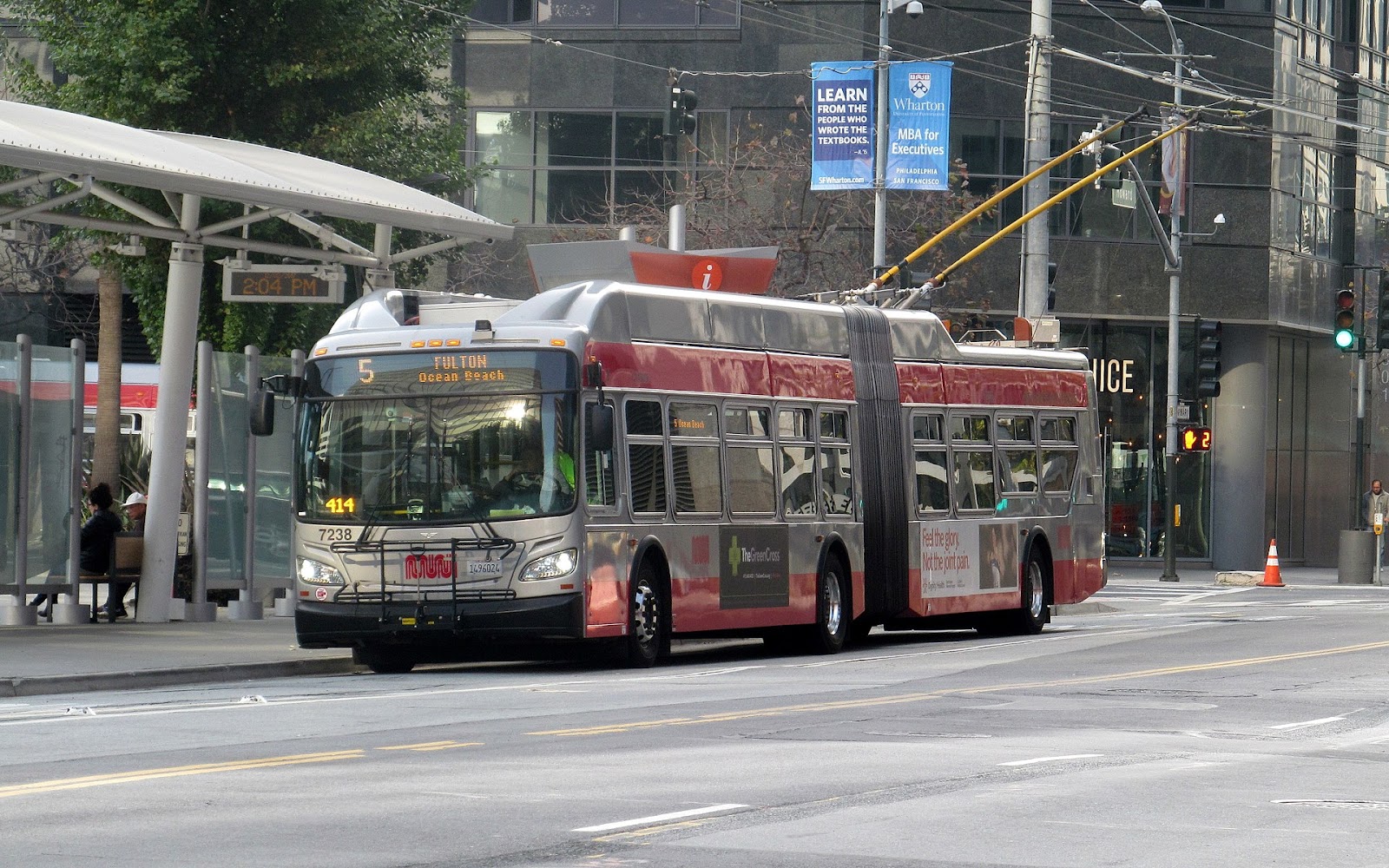
San Francisco Trolley Bus powered by overhead catenary lines.
Photo courtesy of By Pi.1415926535 - Own work, CC BY-SA 3.0, https://commons.wikimedia.org/w/index.php?curid=64552498

I am not a fan of Battery Electric Buses (BEBs) due to their expense and operational difficulties. We need to stop burning stuff that produces greenhouse gases, but we also need to provide the most bus service for the most riders possible. 

Buy American mandates for US transit agencies have them in a bind with too few American BEB manufacturers, all of them in and and out of bankruptcy, and difficulty getting repair parts. In fact, many BEBs have been mothballed despite billions spent on them and specialized charging infrastructure. 

I had always wondered why we didn't utilize the century-old technology of electric trolley buses powered by electricity from overhead lines (called Catenary). In California, only SF Muni still operates them in 2025. 

What is stopping other California agencies like LA Metro from using Trolley Buses? They are cheaper to buy, maintain, power and store. You need fewer of them compared to BEBs, which need to be taken out of service during the day to recharge. Trolley Buses can even be driven off-catenary using small (compared to fully BEBs) on-board batteries. 

CEQA happened. In 1970, then governor Ronald Reagan signed the California Environmental Quality Act into law. 

CEQA requires that any project needs to be evaluated against the status quo. Criteria include Visual Impact Assessment. Since a landscape with overhead wires always scores lower than the same landscape without overhead wires, you can't install them anywhere that doesn't have them. San Francisco still had overhead wires, so they were able to maintain and upgrade their overhead wires without running into CEQA veto points. Los Angeles once had catenary, but had already removed them by 1970s. 

There was no going back--until AB 2503 passed in 2024. Now, electric wires/catenary for buses and trains can be built without running the gauntlet of decades (yes, decades) of CEQA lawsuits. 

In May, 2025, we visited Berlin and took articulated electric buses, some that can run hybrid on and off catenary wires. They ran in dedicated bus lanes, often next to wide bike lanes. It was so easy to get around by bus in Berlin. We loved it. 


Look at the size of that bike lane!

We rode both German and Polish-built buses, which run on different lines. 


Narrower bike lane this time, but that's because road width is tight on a bridge. 

I was so impressed with the Solaris hybrid articulated buses. They can run up to 1/3 of the time off-catenary, can recharge while on catenary, and they never need charging during the day. They can move up to 100 people all day without interruptions of service. This means fewer buses serve more people. So cost-effective and clean. 

Oh, the 100-passenger bus needs only a 700 kWh battery. Compare that to the Tesla Y's 60-80 kWh to move 1 person around. Saves on material costs, too. 

Anyway, they accelerate/deaccelerate smoothly with just a quiet whirr. We really enjoyed sightseeing from inside the buses. I also rode my first double decker bus!

More on Berlin and our April-May Germany trip later. I still need to post pictures of our bicycle cruise on the Mekong Delta in February. My husband jokes that we save carbon by not driving (in Los Angeles!) and avoiding beef, and then blow our carbon budget on international travel. Fair enough. 


Tuesday, June 04, 2013

They said what?!?

So my daughter's 8th grade class went to the high school they will be attending in the fall for "Field Day". "Field Day" is supposed to serve two purposes: help familiarize 8th graders with the high school and allow kids from both feeder middle schools to meet each other in an informal setting.  I suspect that there is a third motive--to allow the athletic coaches to size up the kids for talent and recruit them to try out for sports teams.

It did not go well.

My kid was assigned to golf, lacrosse and track & field.  Golf and lacrosse, and the 180 degree ocean views should be a tip off that this is not your typical California neighborhood public school.

I asked her how it went.  Did she meet anyone interesting?  Did she like any of the sports?

She said that the kids from the other school spent all day talking about how the kids at her school are so "ghetto".

"OMG, did they really say that?", I asked.

"Over and over, although one girl said that wasn't entirely true because 'some of them are white'."

I talked to one of the school staff that chaperoned the event to ask if she heard anything similar.  She replied that she heard even worse.

Kids from the other school came up to kids from our school and said, "We have iPads and you don't."


The chaperone mentioned another thing.  The kids from our school also observed that the other school must not have a dress code; the skimpy attire on some students from the wealthier school would get a student sent home at their school.

Readers from outside the US may not be aware that poorer kids are held to different standards than rich kids.  Poor kids are more likely to live under strict rules of conduct at school such as dress and speech codes.  Kids at the wealthier middle school in our district are entrusted with school lockers while kids at the poorer middle school are not allowed to have them for fear that they might keep contraband articles in them.  (iPads, perhaps?)

If you go by average test scores, the wealthier school would appear to be a superior choice.  But, if you stratify by parental educational attainment--a proxy for class--you can see that their is no statistically significant difference in test scores for children of people with graduate educations.  However, test scores don't tell you about other things kids learn from school.

Aside:

Yes, our school is a Title I school; roughly one third of the students are considered "at risk", mainly due to poverty.  It is also on Program Improvement status because the English-learner students only improved their standardized test scores by an average of 8 points, missing the state goal of 10 points.  They scored well above the state-wide average, but "failed" to improve "enough" to satisfy the state goal for them.  (I'll let you decide whether multiple choice tests can adequately assess learning and improvement.)

If there were 10 or fewer students in a category, the sample size is considered too small to be significant.  However, the entirely predictably erratic performance of 17 students was considered a statistically robust enough result to brand the school a failure and put it in PI status.

Anyone familiar with analysis of variance (ANOVA) aka "the statistics of small numbers" knows nothing magical happens between sample sizes of 10 and 11.  A smaller sample will almost always show more variance than a larger sample.

I think our elected lawmakers should be given standardized tests to assess their critical thinking skills.  Their scores should be posted on the internet and also on the ballots.

Tuesday, July 26, 2011

In loco parentis

Another parent wrote in chalk on the side of their cabin, "I don't know where my children are...I'm at the Lair". That's the Lair spirit! Compare that with this conversation with a mother who didn't have the Lair spirit.

[I agreed with other Lair parents who say that they bring their kids to the Lair so they can roam the woods and the creek without adults trailing after them. The understanding is that all the adults at camp are keeping an eye on all the kids, giving them a long leash, but also stopping dangerous/reckless behavior. E.g. one mom shouted at some kids that were not her own to get off the roof of the stage (albeit carefully); she reasoned that she wouldn't want her kids to be on anything higher than six feet, so she thought those kids' parents wouldn't want their kids up there either.]

This picture captures her in a cuddly mood, but she went mostly free-range last week. Our entire family loves that hammock.
She babysat her 5 yo cousin so that all the adults in our cabin could go on the hike to Sword lake. Notice that the flowers are just coming into flower at this elevation.
Her independence also provides us with independence. It's a bittersweet feeling, though.

Down by the creek for a little bonding time. We walked, talked, painted some watercolors, and observed the standing waves behind the rocks. (Our rafting guide in Colorado had discussed standing waves; I was surprised how much Iris remembered about wave and hydro-dynamics from the guide's talk.)
It's hard to convey how much joy that gave me, discussing and observing waves with my daughter. I worked as a teaching assistant for Quantum Mechanics for three semesters and work as a meteorologist now. Wave mechanics is near and dear to my heart and it warms my mommy cockles to see that they fascinate my daughter, too.

While we were having our internet-free camping trip, international pi-day, 22 July, passed. I still owe you a post about how to know any size circle. I even brought along this shawl so that I could photograph it down by the creek. But I was so in the moment of our vacation, I plumb forgot. You'll have to gaze upon it on our family room carpet instead. More on knitting circles later.

Tuesday, August 23, 2022

Carbon Intensity of eBiking vs Driving

 
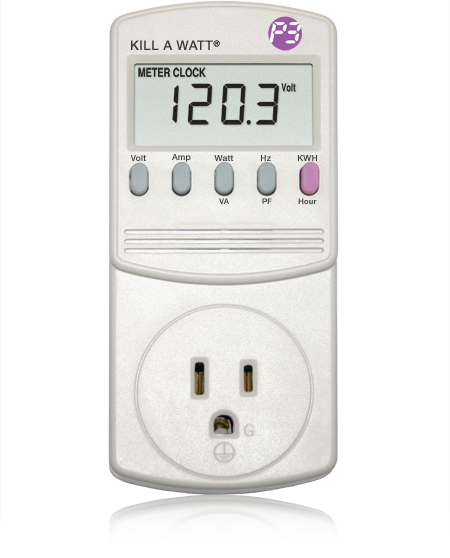
Remember when I ran some numbers about my utility cycling around the South Bay (SW region of Los Angeles County)? I use a Kill A Watt meter to plug in my eBike charger so I know how much electricity I use.  I also keep track of my miles so I know that I use 5-10 watt-hours/mile while running errands that I normally would do by car.  


Let's use the higher 10 watt-hours/mile number for when I want to get somewhere quickly but don't want to get sweaty. 

My Class 2 eBike tops out at 20 mph, but my area has a lot of stop signs and stop lights. 

My Prius hybrid calculates my trip average speed and I know that I average 16-17 mph on those 3-12 mile round trip errands. 

Basically, I go the same speed by car and eBike. 

This is why people complain about traffic in my area. Driving speeds are slow. Alternatively, we can reframe that to "eBikes will get you there just as fast as driving, while building moderate exercise into your daily routine."

[My census tract has 17,000 people/square mi and the California DMV found that the South Bay has anomalously many cars/registered driver (over 1!). Anyway, we are a car-dependent suburb even though we have the density to support better ways of getting around. People also complain about parking. It's a problem when we own so many cars and we don't put them in our garages because our garages are stuffed with things that are not cars.   Anyway, I digress.]

This post is about the carbon intensity of eBiking vs Driving. 

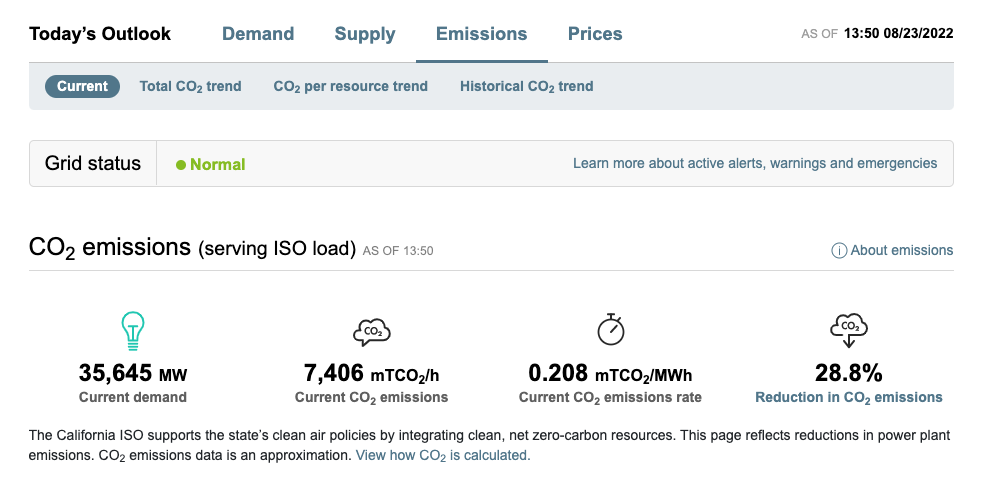
California passes lots of regulatory laws, including one that requires us to track the carbon intensity of our electricity supply. CAISO is the public agency in charge of operating our electricity grid and they publish data from real-time statistics to year end reports to help us track whether or not we are meeting our myriad goals. 

As the League of Women Voters California Energy Subcommittee team leader, I stalk the CAISO data website a lot more than the average Californian. 

Visit the CAISO Emissions page and see the instantaneous CO2 intensity of the California grid. 


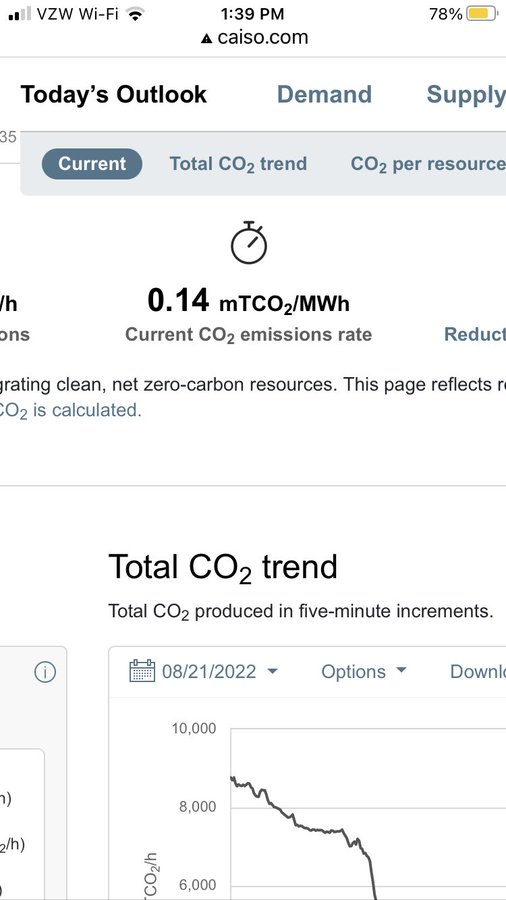
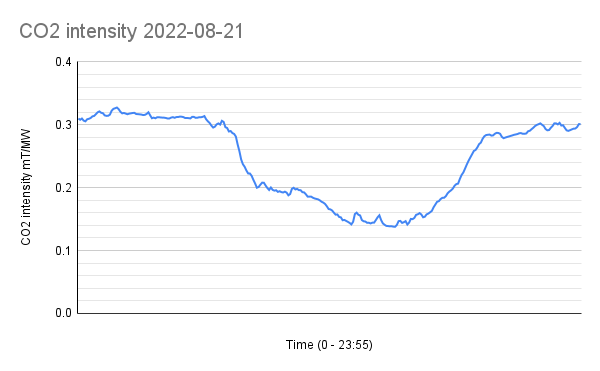
Last Sunday, I hung out the laundry and plugged in my eBike at midday, when the grid CO2 intensity was at it's daily nadir, 0.14 mTCO2/MW. (Midday on weekends, on sunny but not overly hot days, have the lowest CO2 intensity.)


If you missed it in real-time, you can still reconstruct the CO2 intensity by downloading the 5-minute grid CO2 emissions and total system demand data for a given day, and then dividing it for the ratio.  I pulled the data for Sunday, August 21 and put it in Google Sheets. LOL, I really took a screen shot at the absolute minimum for the day. 


A mT or metric ton is 1,000 kg. A MW = megawatt = 1,000 kilowatts. Metric conversions are so easy. 

.14 kg CO2/kWh 

.14 g CO2/Wh 

At 10 Wh/mi, I emitted 1.4 g CO2/mile running my errands last Friday and charging at midday on Sunday. 

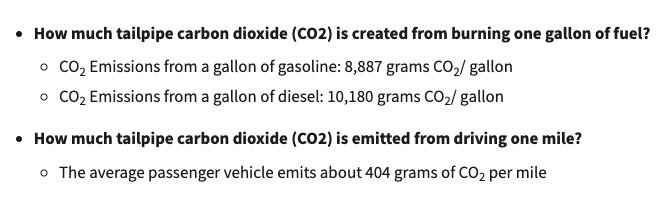
The EPA publishes stats on GHG emissions from passenger vehicles assuming 22 mpg. 


I was tweeting from my phone and mis-remembered it as 440 g/mi using 20 mpg. That's only 1% off from the actual 444 g/mi.  Anyway, using the 440 number, I got a cute number of very close to 100*pi 

440/1.4 = 314

Of course, I drive a hybrid and get ~40 mpg so the ratio for me driving vs eBiking is 159. 

I looked at Tesla drivers' forums and it seems they use about 300 Wh/mi or 30x as much electricity as me on my eBike. If they charge only at midday, then they would be emitting 42 g/mi, which is not bad. But, if they are charging in the middle of the night, as utilities encourage them to do, then the CO2 emissions intensity doubles to 84 gCO2/mi. 

Then there's the embodied emissions of producing electric cars. Their batteries are hundreds of times larger than my eBike's and about 10x the size of a plug-in hybrid.

Tesla Y: 75 kWh battery

eBike: 0.5 kWh battery

Prius Prime: 8.8 kWh battery (plug-in hybrid)

There are serious environmental issues with battery production for EVs. We're up against physical limits. We can't produce them fast enough for the fossil-fuel transition unless we drive a lot less than we currently do. 

Anyway, the bottom line is to minimize your car driving, do it in an EV if you have one. Hybrids, particularly plug-in hybrids, are a decent trade-off as long as you don't drive it a lot in gasoline mode.

If you don't have solar panels, charge when your grid is cleanest. (This varies by region.) If you have solar panels, charge when your panels are producing more than the rest of your home needs. 

Sunday, October 14, 2007

Unread Books

I couldn't resist this meme I saw on Dooney's World and Pea Soup. These are the top 106 books most often marked as "unread" by LibraryThing’s users.

"The books I've read are in bold,
the ones I started but couldn't/didn’t finish are in italics,
what I couldn’t stand has a strike through,
those I've read more than once have an asterisk*,
and those underlined are on my To Be Read list."

I have started and not finished more books than this list would make it appear. With the green background of this template, it is difficult to distinguish between bolded letters and normal letters. Try temporarily increasing the font size of this page to make the distinction more obvious.

Jonathan Strange & Mr Norrell
Anna Karenina
Crime and punishment
Catch-22

One hundred years of solitude
Wuthering Heights
The Silmarillion
Life of Pi
The name of the rose
Don Quixote
Moby Dick
Ulysses
Madame Bovary
The Odyssey
Pride and Prejudice
Jane Eyre
A Tale of Two Cities

The Brothers Karamazov
Guns, Germs, and Steel: the fates of human societies
War and Peace
Vanity Fair

The Time Traveller’s Wife
The Iliad
Emma
The Blind Assasin
The Kite Runner
Mrs Dalloway
Great Expectations
American Gods
A heartbreaking work of staggering genius
Atlas shrugged
Reading Lolita in Tehran: a memoir in books
Memoirs of a Geisha
Middlesex

Quicksilver
Wicked: the life and times of the wicked witch of the West
The Canterbury tales
The Historian : a novel
A portrait of the artist as a young man
Love in the time of cholera
Brave New World
The Fountainhead

Foucault’s pendulum
Middlemarch
Frankenstein
The Count of Monte Cristo
Dracula
A clockwork orange
Anansi boys
The once and future king
The grapes of wrath
The Poisonwood Bible
1984
Angels & demons
The inferno
The Satanic Verses
Sense and Sensibility
The picture of Dorian Gray
Mansfield Park
One flew over the cuckoo’s nest

To the lighthouse
Tess of the D’Urbervilles
Oliver Twist

Gulliver’s travels
Les misérables
The corrections
The amazing adventures of Kavalier and Clay
The curious incident of the dog in the night-time
Dune
The prince
The sound and the fury
Angela’s ashes
The god of small things
A people’s history of the United States : 1492-present
Cryptonomicon
Neverwhere
A confederacy of dunces
A short history of nearly everything
Dubliners
The unbearable lightness of being
Beloved
Slaughterhouse-five
The Scarlet Letter
Eats, Shoots & Leaves
The Mists of Avalon
Oryx and Crake
Collapse : how societies choose to fail or succeed
Cloud Atlas
The Confusion
Lolita*
Persuasion
Northanger Abbey
The Catcher in the Rye

On the Road
The Hunchback of Notre Dame
Freakonomics : a Rogue Economist Explores the Hidden Side of Everything
Zen and the Art of Motorcycle Maintenance
The Aeneid
Watership Down
Gravity’s Rainbow
The Hobbit
In cold blood : a true account of a multiple murder and its consequences
White teeth
Treasure Island
David Copperfield
The Three Musketeers

Mark has been systematically going through his lifetime to be read list lately. It would be interesting to see his list.

Tomorrow is Blog Action Day. I am putting together a photo essay; I still need to take a few more photos today on my walk.